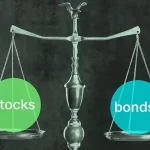

Stocks vs Bonds: Choosing the Right Mix for Your Investment Goals
Choosing investments can sometimes feel like picking between two very different players. Stocks promise growth and excitement, while bonds are usually associated with income and stability. But investing does not necessarily require choosing only one side.
The Stocks vs Bonds debate is really about understanding what each asset can do for your portfolio. Stocks represent ownership in companies, while bonds generally represent money lent to a company, government, or other issuer.
Both come with advantages and risks. The right combination depends on your financial goals, investment timeline, and comfort with market fluctuations. Understanding those differences can make portfolio decisions much easier.
Stocks: More Growth Potential, More Ups and Downs
When you purchase shares, you become a partial owner of a company. If that business grows and becomes more valuable, its share price may increase, potentially giving investors capital gains.
Stocks have historically offered strong long-term growth potential, particularly for investors able to remain invested through market cycles. Investor.gov notes that investors holding stocks over long periods have generally been rewarded with strong positive returns, although there is never a guarantee.
Some companies also distribute part of their profits through dividends. However, dividends can be reduced or eliminated, so they should not be treated as guaranteed income.
The Main Risks of Investing in Stocks
Higher growth potential comes with greater uncertainty. Stock prices can rise and fall sharply because of economic conditions, company performance, industry developments, or investor sentiment.
This movement is known as volatility. FINRA explains that greater price swings generally mean greater volatility and potential risk.
That makes stocks potentially uncomfortable for someone who may need the invested money soon. A market decline shortly before a major expense, for example, could force an investor to sell shares at an unfavorable price.
Diversification can help reduce company-specific risk, but it cannot completely eliminate the possibility of investment losses.
Bonds: Income and Greater Predictability
Bonds work differently. Instead of buying ownership in a business, investors are effectively lending money to an issuer for an agreed period. In return, many bonds provide interest payments and repay their principal according to specified terms.
Investor.gov describes a bond as a debt security similar to an IOU, issued when organizations borrow money from investors.
This structure can make bonds attractive to investors who value income and potentially lower volatility. They may also be useful when an investment goal is getting closer and preserving capital becomes more important.
However, “safer than stocks” does not mean risk-free.
Understanding Bond Risks
One important risk is interest rate risk. Bond prices generally move in the opposite direction of interest rates. When market rates rise, existing fixed-rate bonds may become less attractive, causing their market prices to fall.
Credit risk matters too. A company or other issuer could experience financial difficulties and fail to make promised interest or principal payments. FINRA notes that lower credit quality generally comes with greater default risk.
Inflation is another consideration. If inflation rises faster than the income produced by a fixed-rate investment, the purchasing power of that income may decline.
Stocks vs Bonds: Which Is Better?
There is no universal winner.
Imagine two investors. One is 30 years old and investing for retirement several decades away. The other plans to use part of their portfolio for a home purchase within several years.
The first investor may be more comfortable accepting stock-market fluctuations in exchange for greater growth potential. The second may prefer a larger allocation to comparatively stable assets because there is less time to recover from a major market decline.
Investor.gov emphasizes that asset allocation should consider both time horizon and risk tolerance. Investors with longer horizons may be more comfortable with volatile investments, while shorter horizons often call for less risk.
Building a Balanced Portfolio
Rather than treating Stocks vs Bonds as an either-or decision, many investors combine them.
For example, a hypothetical growth-oriented portfolio might hold a larger proportion of equities with a smaller bond allocation. A more conservative investor might reverse that balance. These are examples rather than universal formulas—the appropriate allocation varies from person to person.
Diversification spreads money across different investments rather than relying heavily on one asset. Investor.gov identifies diversification as an important method of reducing investment risk.
Investors can diversify further through different industries, company sizes, bond issuers, maturities, geographic markets, and other asset classes.
Why Portfolio Rebalancing Matters
Your original allocation will not stay constant automatically.
Suppose you begin with 60% stocks and 40% bonds. After a strong equity market, stocks might grow to represent a much larger percentage of the portfolio. Your risk exposure has now changed even though you never intentionally changed your strategy.
Rebalancing involves adjusting investments to return toward the intended asset allocation. Investor.gov explains that this can be necessary when different investments grow at different rates and push a portfolio away from its original goals.
Periodic reviews can therefore keep your investment strategy connected to your goals rather than short-term market excitement.
The Stocks vs Bonds decision is less about finding a champion and more about finding the combination that works for you. Stocks can offer stronger long-term growth potential but usually bring greater volatility, while bonds can provide income and greater stability but still carry interest-rate, credit, and inflation risks.
Consider your investment timeline, financial objectives, ability to tolerate losses, and need for income before deciding how much of each asset to hold.
Review your portfolio periodically and rebalance when necessary. Most importantly, research investments carefully rather than chasing recent performance. A thoughtful mix can help create a portfolio designed for both opportunities and uncertainty.
This article is for educational purposes and does not constitute personalized investment advice.