Mobile Gaming and the New Era of Everyday Entertainment
Think about how people fill ten spare minutes today. Some scroll through social media, others watch a short video, and millions open a game on their phone.
That simple behaviour says a lot about how entertainment has changed.
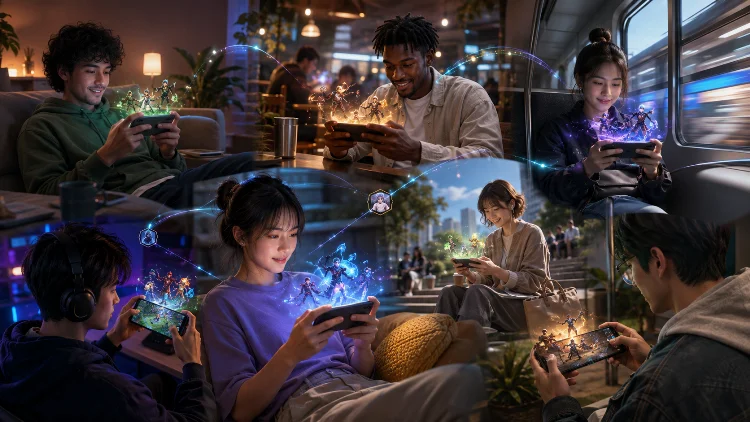
Mobile Gaming has turned gaming into an activity that can fit almost anywhere in daily life. It does not demand a television, gaming room, expensive computer, or even a long session. Yet modern smartphone games can still offer deep stories, competitive multiplayer, social communities, and complex progression systems.
This combination of accessibility and depth has changed more than gaming itself. It has influenced how entertainment companies attract audiences, how digital content generates revenue, and how people connect with friends through interactive experiences.
Gaming Is Competing Directly for Everyday Attention
Traditional entertainment used to fit into fairly clear categories.
Television was watched at home. Cinema required a trip to a theatre. Console gaming generally happened in front of a dedicated screen.
Smartphones removed many of those boundaries.
A game can now compete for the same five or ten minutes that might otherwise go to TikTok, Instagram, YouTube, Spotify, or a streaming platform.
This makes attention one of the most valuable currencies in digital entertainment.
Sensor Tower found that although mobile game downloads faced pressure, engagement remained resilient, with mobile gaming sessions rising 12% in 2024.
The industry is therefore increasingly focused on how often people return rather than simply how many people install a game.
Games Are Designed Around Daily Habits
Modern mobile titles often fit naturally into everyday routines.
Daily login rewards encourage players to open a game regularly. Short missions make it possible to achieve something during a break, while longer events provide deeper entertainment for users who have more time.
Small Sessions Can Build Long-Term Engagement
A five-minute session may seem insignificant, but repeated every day it can create a strong habit.
Developers reinforce that habit with progression systems, achievements, weekly objectives, seasonal rewards, and community events.
This is one reason LiveOps has become so important.
Sensor Tower notes that the mobile market has increasingly focused on long-term player value, monetisation, and disciplined LiveOps rather than simply maximising download volume.
Games are becoming less like movies that end and more like television series that continuously introduce new episodes.
The Audience Is Much Broader Than the Traditional Gamer
One of mobile gaming’s biggest cultural effects is the expansion of the gaming audience.
Someone who would never describe themselves as a gamer may still play word games, puzzles, card games, simulations, or strategy titles every day.
The smartphone makes gaming available without requiring people to identify with traditional gaming culture.
The Entertainment Software Association’s 2025 research found that nearly two-thirds of Americans regularly played video games, with an average player age of 36. The gender split was also relatively balanced.
This broader audience has encouraged publishers to explore a huge variety of genres, themes, art styles, and difficulty levels.
There is no longer one typical mobile player.
Social Features Have Turned Games Into Meeting Places
A modern mobile game can function as entertainment and social space at the same time.
Players join teams, chat with friends, compete in leagues, cooperate against bosses, exchange resources, and compare achievements.
Apple’s Game Center is one example of how platforms are building social functionality directly into gaming ecosystems. It supports multiplayer matchmaking, achievements, leaderboards, real-time play, and connections between friends.
These features can make games feel less isolated than watching a film or scrolling through a video feed.
The player is actively participating rather than simply consuming content.
Research from the ESA’s global Power of Play project also found that 62% of surveyed players agreed that video games can foster positive connections.
Free-to-Play Changed Consumer Expectations
Another major contribution from smartphone gaming is the idea that people can begin using entertainment before paying for it.
Free-to-play games allow millions of users to download a title with very little commitment.
Some players never spend anything. Others purchase cosmetic items, additional content, subscriptions, virtual currency, or season passes.
Advertising can provide another revenue source.
This flexibility has helped popularise hybrid monetisation, where developers combine several revenue models instead of depending on one.
It also changes the relationship between creators and audiences. Developers must continually give players reasons to remain engaged if they want recurring revenue.
Mobile Gaming Helped Create Always-On Entertainment
Modern entertainment increasingly has no real ending.
Streaming services constantly add new shows. Social media feeds never stop updating. Online creators publish new content every day.
Games have adopted the same rhythm.
Live-service mobile titles frequently introduce seasonal updates, special collaborations, new game modes, and limited-time events.
A popular game may even collaborate with films, musicians, sports organisations, or other entertainment franchises.
This turns the game into an evolving platform rather than a static product.
For players, there is almost always something new to check.
Gaming and Social Media Now Feed Each Other
A large part of a mobile game’s popularity can develop outside the game.
Short gameplay clips may spread through TikTok. Strategy guides appear on YouTube. Streamers showcase updates on Twitch or other platforms. Communities discuss characters and tactics on Reddit and Discord.
This means Mobile Gaming is closely connected with creator-led entertainment.
A successful game can produce thousands of hours of secondary content made by fans and influencers.
In some cases, viewers may spend more time watching gaming content than actually playing.
That is a major change from older entertainment models, where the audience was mainly expected to consume professionally produced content.
Cross-Device Gaming Is Creating One Connected Ecosystem
Modern players are also becoming less interested in rigid platform boundaries.
They want to start a game on one device and continue somewhere else.
Google’s Play Games Services connects more than two billion gamer profiles and supports features intended to create more connected experiences across devices.
Google Play Games on PC has also expanded smartphone-focused gaming beyond the phone itself, while Apple continues integrating games across iPhone, iPad, and Mac through its gaming services.
This suggests that the future may be less about choosing between “mobile” and “PC” gaming.
The account, community, and game experience may become more important than the screen being used.
Mobile Games Have Become a Serious Part of the Entertainment Economy
Mobile gaming is not simply popular because people own smartphones. It has become an enormous commercial market in its own right.
Newzoo estimated mobile would account for roughly $103 billion, or 55% of global game revenues, in its 2025 market outlook.
Meanwhile, Sensor Tower reported three consecutive years of App Store and Google Play mobile gaming revenue growth through 2025.
That economic scale attracts developers, publishers, advertisers, entertainment brands, and investors.
It also means innovations created for mobile games can influence the wider entertainment business.
Mobile Gaming has helped turn entertainment into something more accessible, interactive, social, and continuous.
Games now compete for the same daily attention as social networks, streaming platforms, and online video. At the same time, they provide something those formats cannot always offer: direct participation.
Players can compete, cooperate, build communities, create content, and influence what happens inside the experience.
As cross-platform gaming, social features, LiveOps, and smartphone technology continue improving, the boundary between mobile games and other forms of digital entertainment will become even less obvious.
For anyone interested in where entertainment is heading next, mobile gaming is one of the most important spaces to follow.